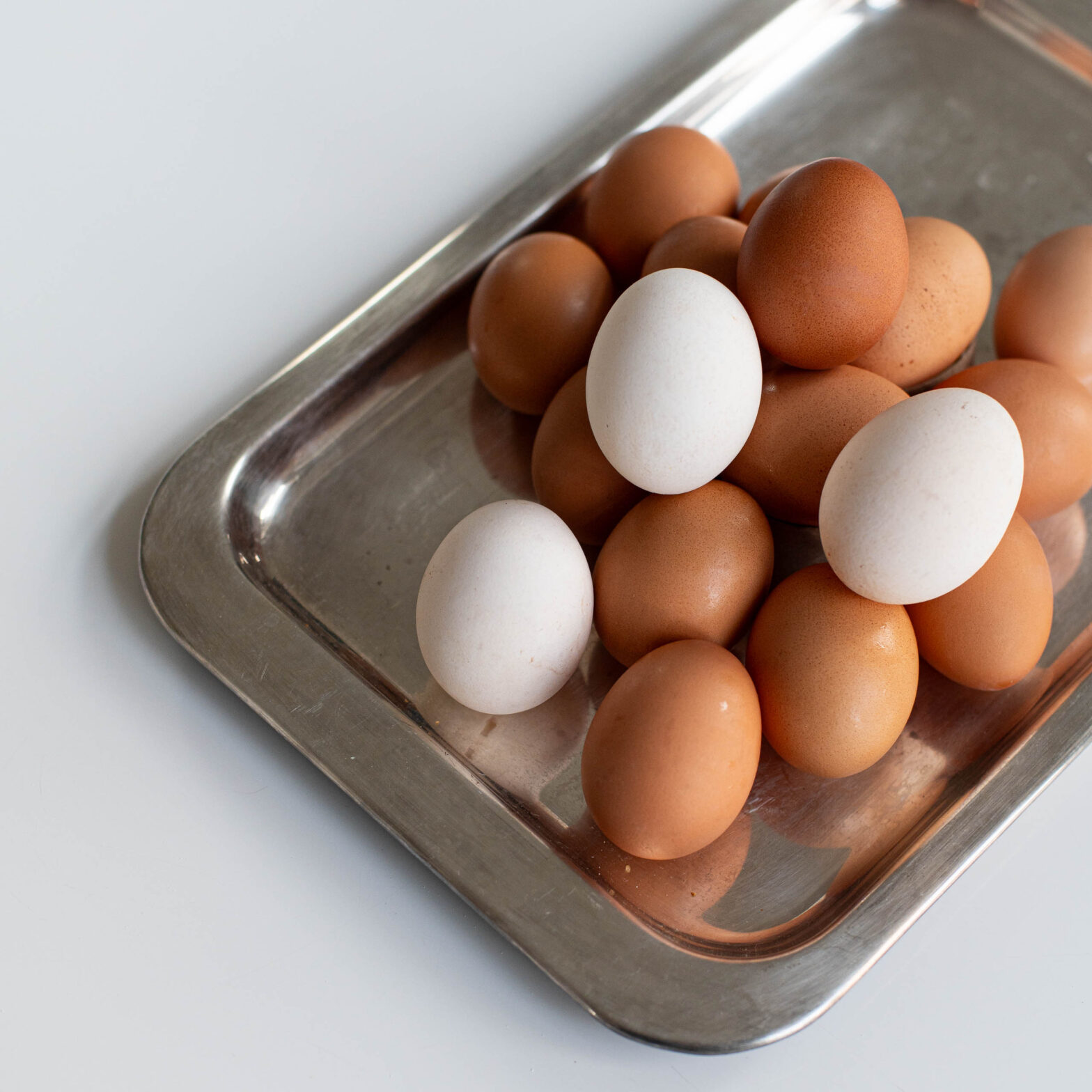
If you’re a brown eggs household but dreaming of soft pastel dyed Easter eggs, you don’t have to run out and buy white eggs. You can actually lighten brown eggs in about 10–15 minutes using white vinegar, which removes the outer pigmented layer of the shell and makes them noticeably paler. Below, I’ll show you how to do it with either a cold soak or a quick vinegar-water boil.
*This blog post contains affiliate links, meaning that if you purchase any of the items using the links I provide I, as the author of this website, will receive a very very small commission from that sale. This is a great way to help support your favorite bloggers at no cost to you. Think of it like a tip jar that costs you nothing!
Can You Dye Brown Eggs For Easter?
Yes! However, the resulting colors will typically turn a deeper, muddier color than those achieved with white eggs.
Yellows will become a darker mustard color, pink shifts more toward dark coral or red, light blue will turn into a dark teal and light green will be an almost dark forest green. None of these are bad, however they likely aren’t the soft pastel Easter shades most people have in mind.
Why Vinegar Works To Lighten Brown Eggs Naturally
Brown eggs look darker because of a pigment coating the shell’s surface.
When you soak the shell in vinegar, the acetic acid in the vinegar reacts with the calcium carbonate in the shell, slowly dissolving the outer layer where most of that brown pigment sits.
As that surface layer breaks down, the egg appears lighter and closer to white, which allows pastel dyes to show up more clearly.
Eventually, if you were to soak the shell too long, the shell would dissolve completely!
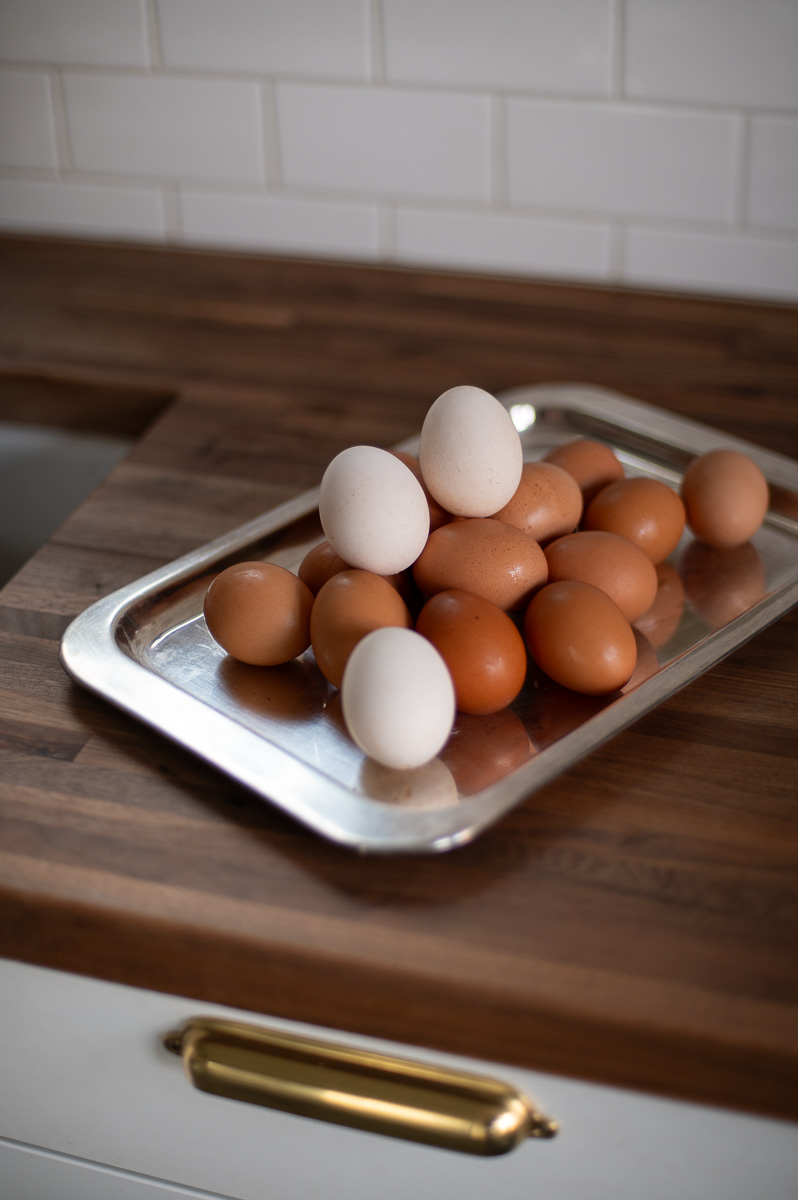
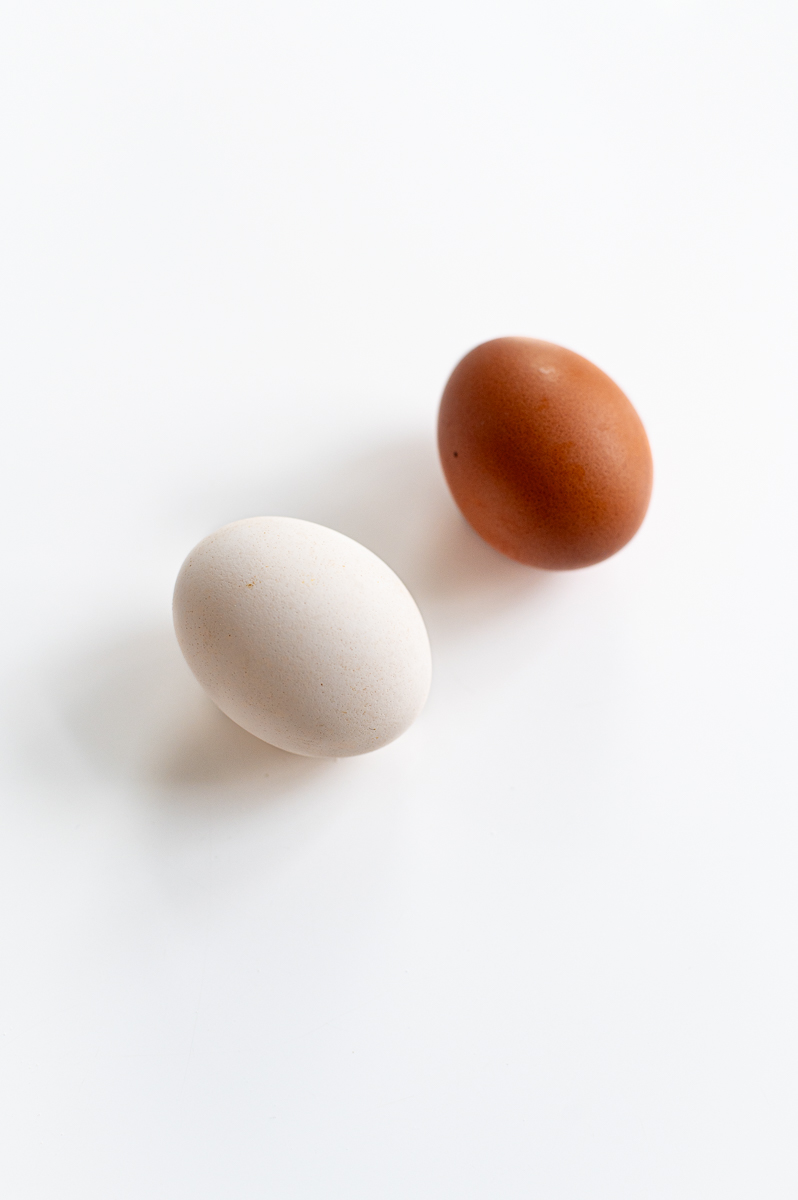
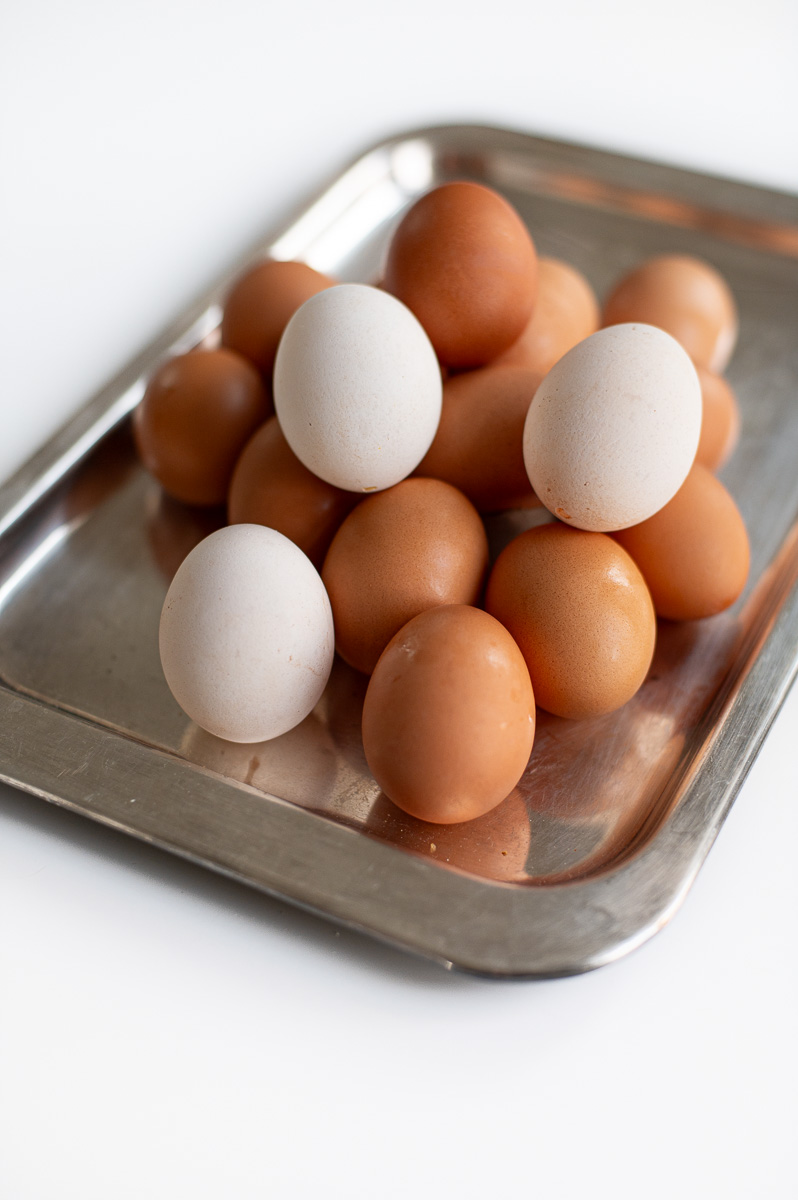
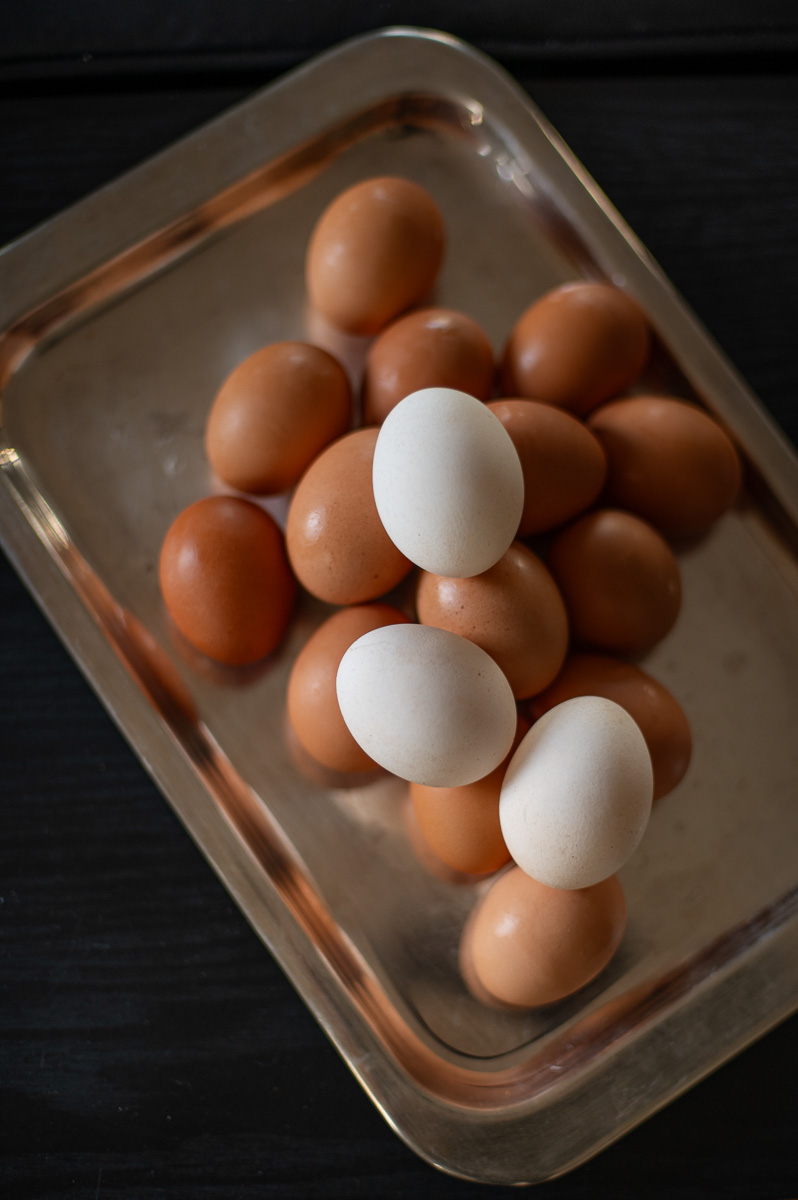
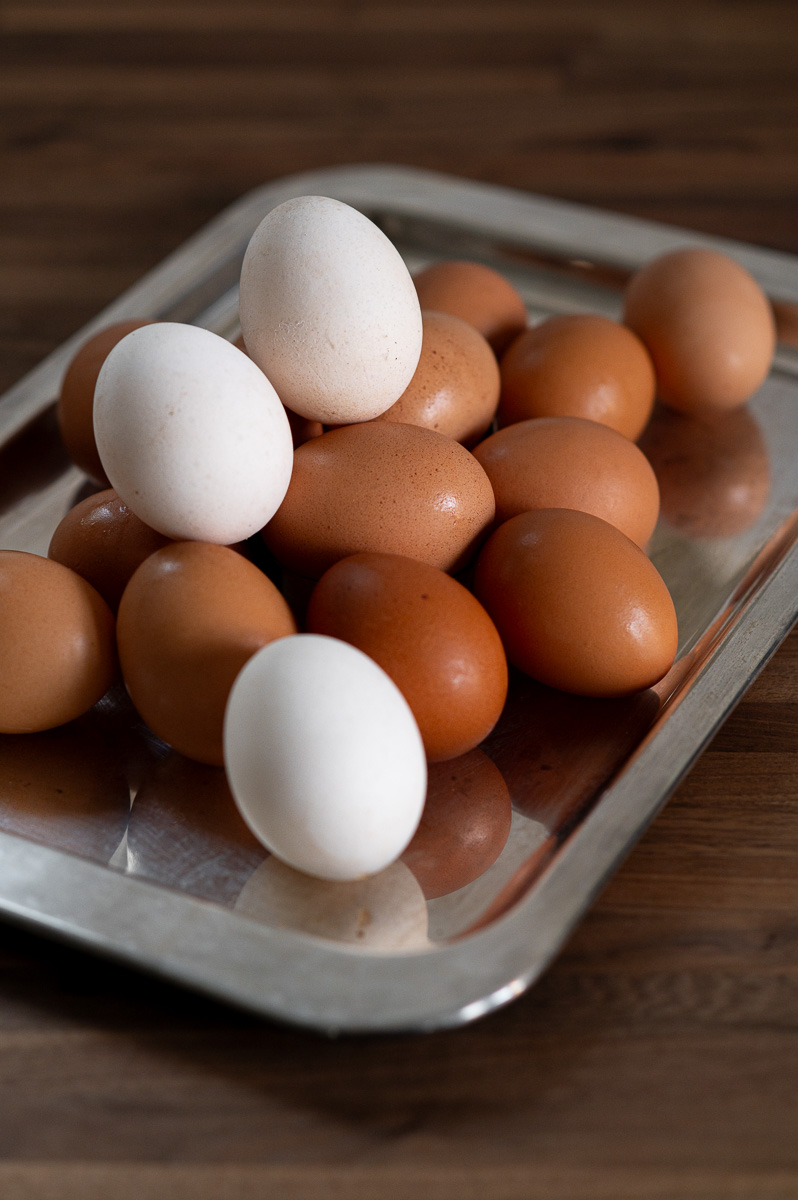
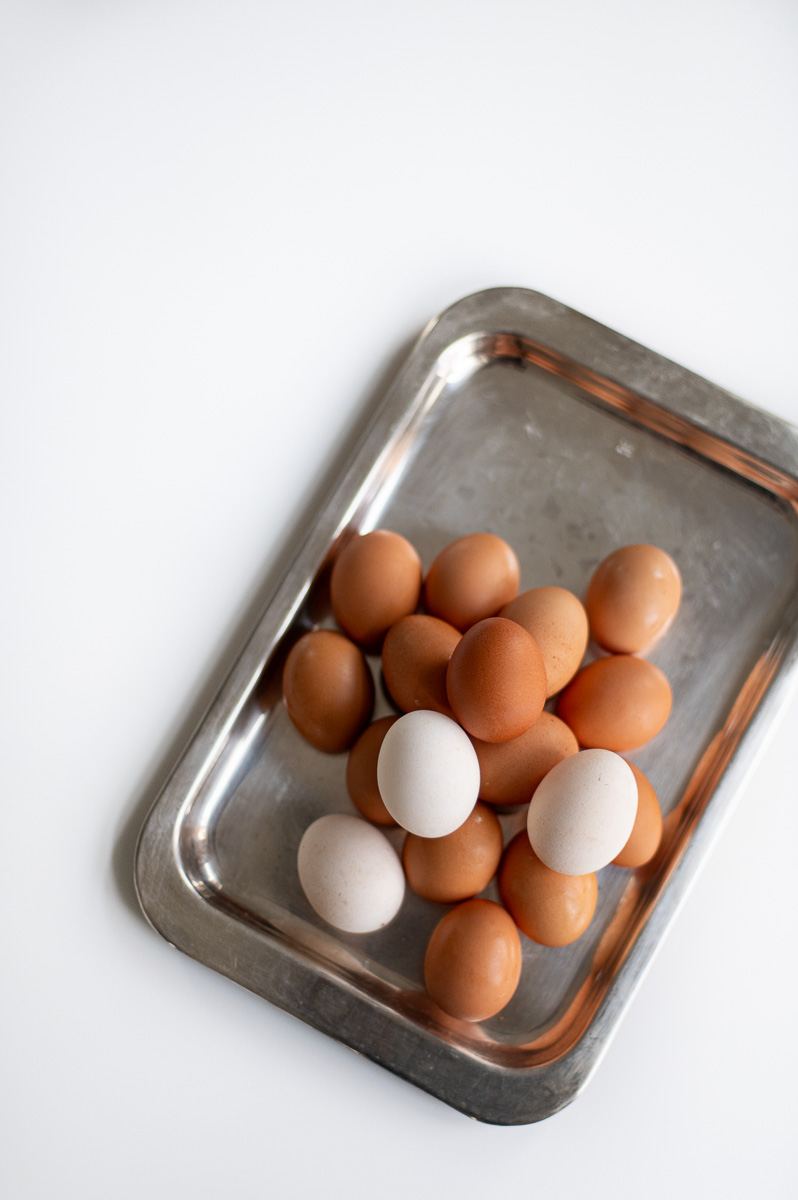
Pictured above are some before and afters for you, showing just how white you can get brown eggs using this method!
Can You Lighten Blown & Hard Boiled Brown Eggs?
For this tutorial, I’ll be using blown brown eggs.
However, if you don’t want to go through all the trouble of blowing out your eggs (this tool makes that process much easier though) you can also follow this same process using hard boiled eggs as well! (An no, it doesn’t affect the taste of the hard boiled eggs at all if you want to eat them later!)
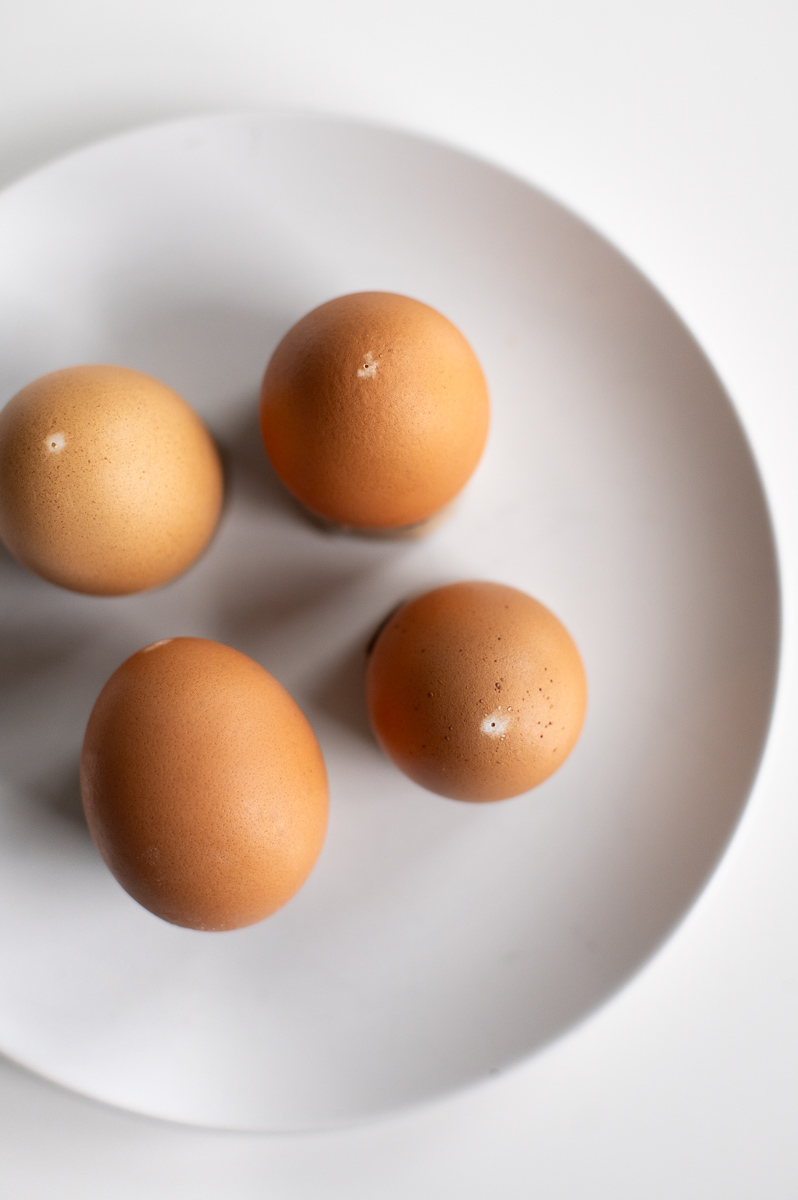
How To Lighten Brown Eggs For Easter Dye
There are two ways you can go about using vinegar to lighten your brown eggs, one uses heat the other does not. I tried both. Here’s the full process:
Supplies Required
- Brown Eggs
- Distilled White Vinegar
- Water
- A Soft Dish Sponge/Scrubby
- A Bowl, Wide Mouth Jar or Sauce Pan
Lighten Brown Eggs With A Cold Vinegar Soak
I decided to start off by testing a cold vinegar soak first, since that seemed a bit easier:
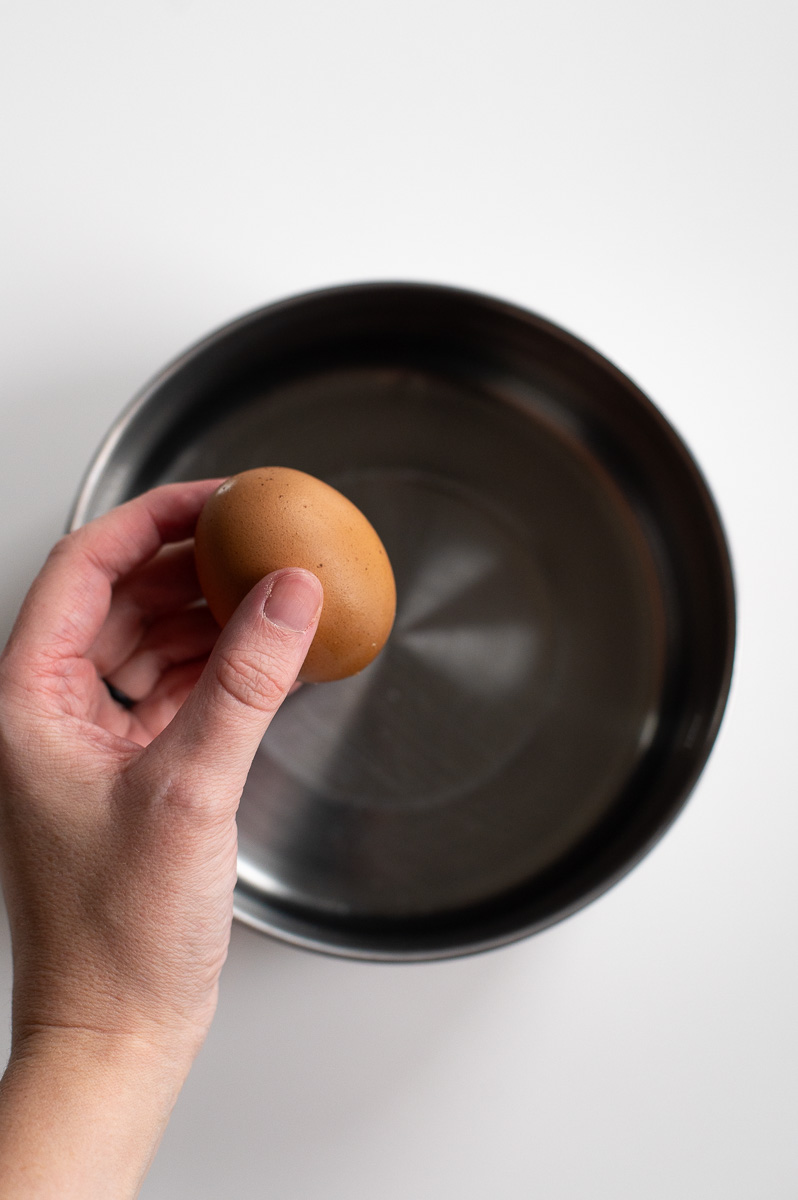
Step One: Fill A Bowl or Jar With White Vinegar & Add Your Eggs
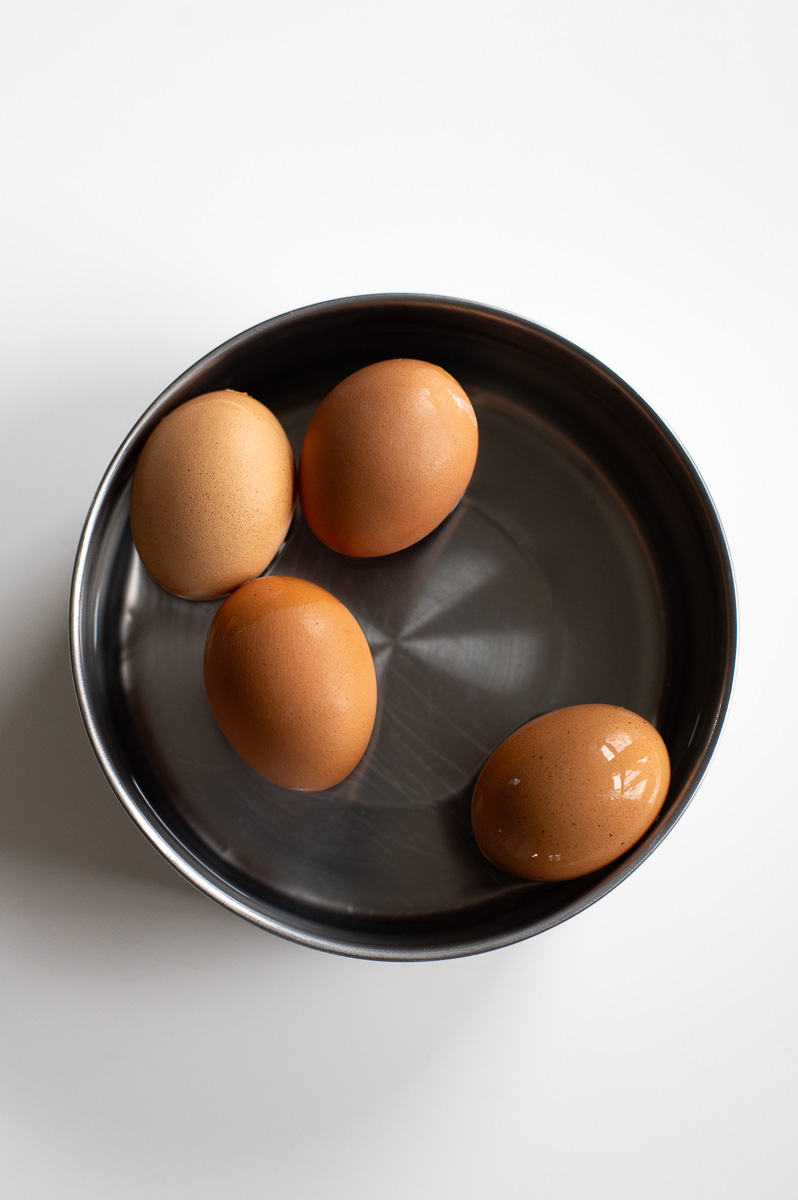
I filled a small bowl with white vinegar for my test, but in hindsight I think a wide mouth jar with a lid might have been a better option.
Step Two: Submerge Your Eggs For 7 Mins Minimum
For some reason I thought my blown eggs would just fill up with vinegar and sink, this was not the case. So whether you are using blown or hard boiled eggs you will need to use something to keep your eggs submerged while soaking.
Luckily the bowl I used was part of a nesting set, so I just used the next size smaller bowl to gently hold my eggs down.
However, it definitely wasn’t ideal to have to sit like that for 7 minutes. Which is why I think I’d use a wide mouth jar with a lid next time.
Step Three: Remove From Vinegar & Scrub Clean
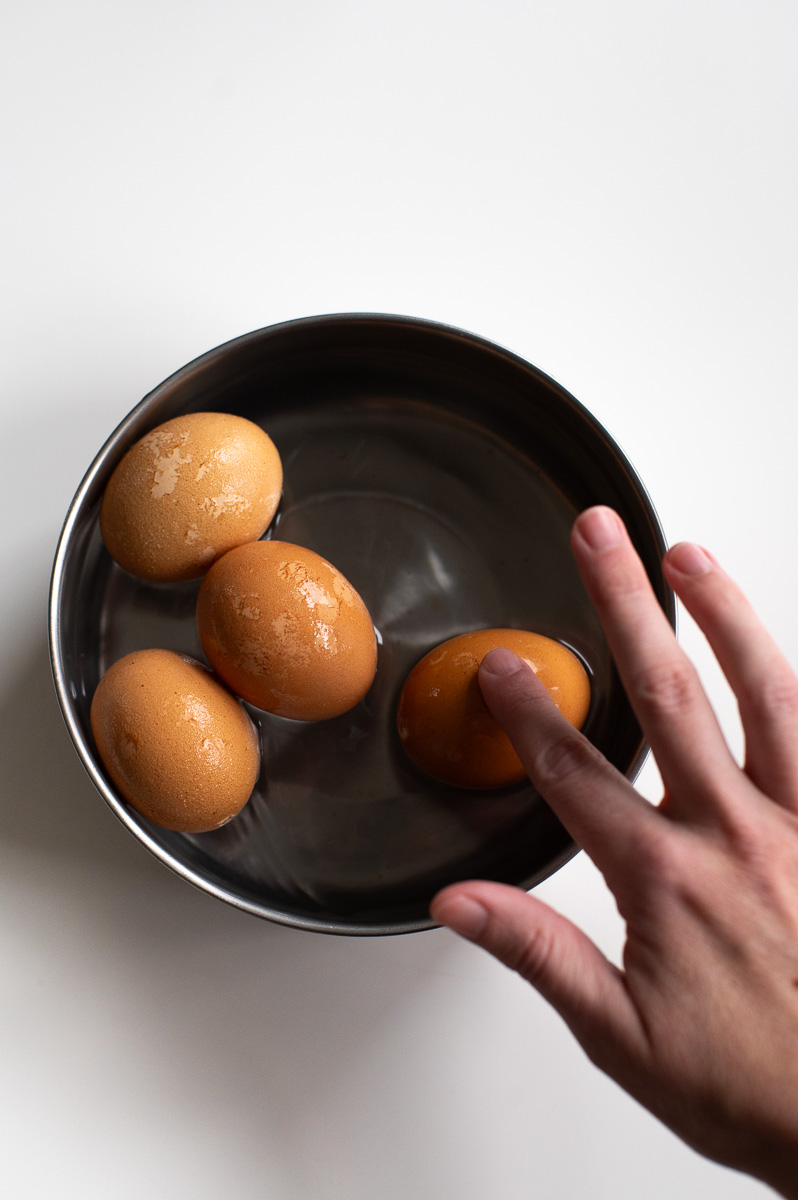
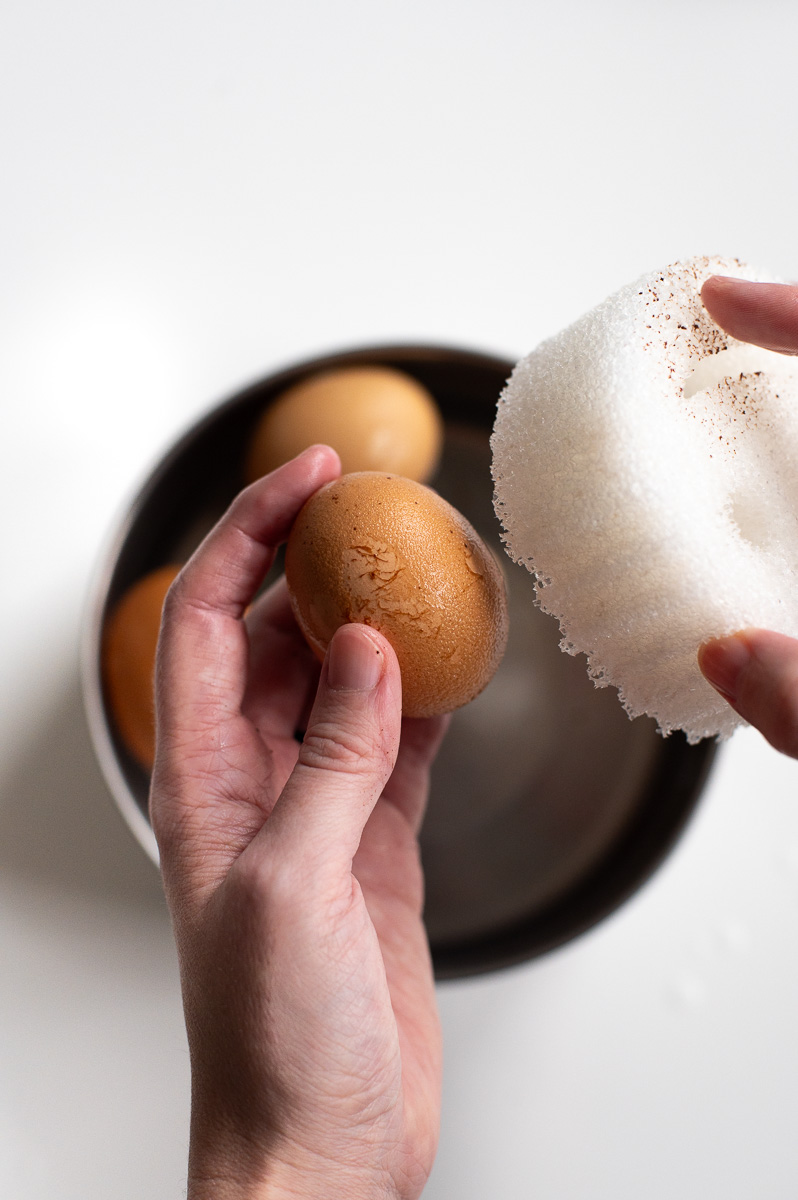
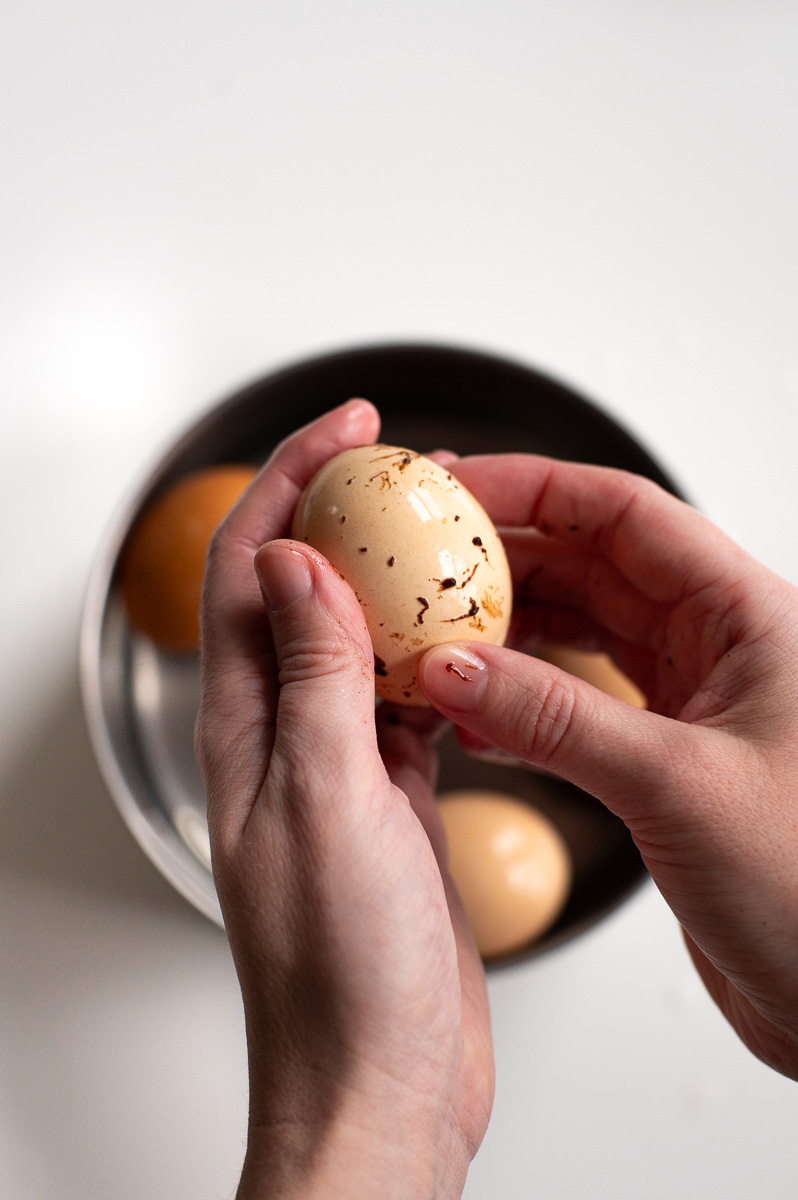
After roughly 7 minutes you should start to see the top layer of brown pigment starting to dissolve off the surface of your eggs.
When you see that happen, remove your eggs from the vinegar soak, and give them a gentle scrub to remove the brown pigment off the surface.
If you’re happy with how much your eggs have lightened, move onto step four. If not, pop them back into the vinegar soak for a few more minutes.
Step Four: Rinse Thoroughly With Water
When you have lightened your brown eggs to your desired level, wash them thoroughly with water to stop any further chemical reaction and set them on a tray to dry.
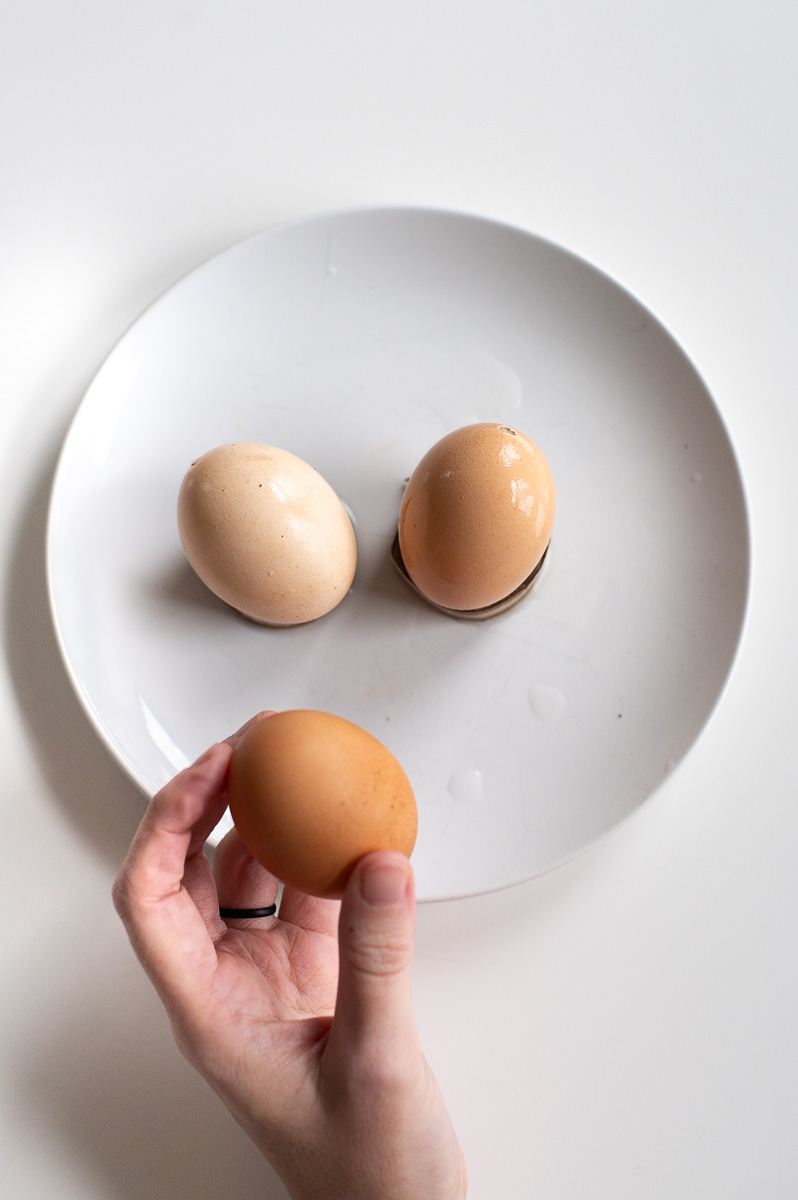
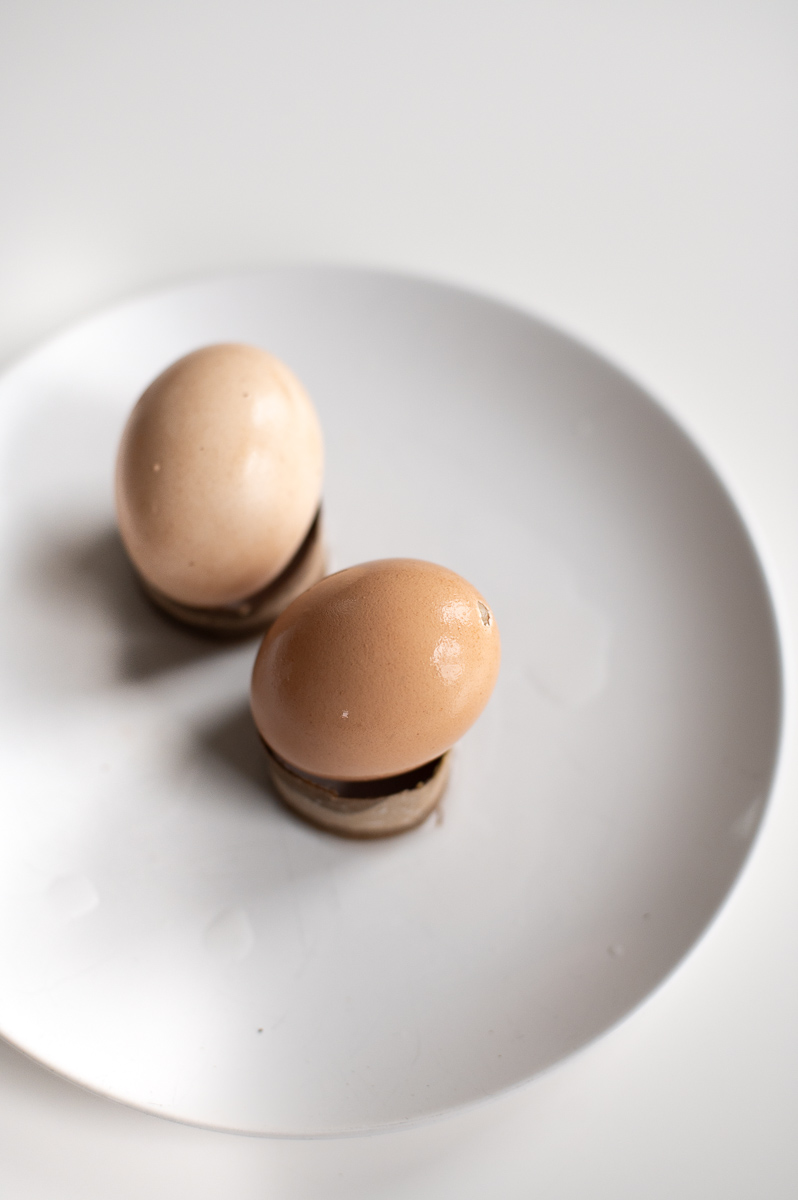
In the images above, I’m holding a “before” egg so you can see how much these two eggs lightened from just sitting in the cold vinegar bath for 7mins.
Each egg will lighten at a different rate, so you’ll have keep an eye on each of them individually as they lighten.
Lighten Brown Eggs By Boiling Them In Vinegar & Water
After soaking my brown eggs in cold vinegar to lighten them for 7 minutes, the eggs were still more brown that I wanted them to be. While I could have put them back in the cold vinegar bath, I decided to test boiling them in vinegar and water instead.
Step One: Fill A Pot With 1 Part Water and 1 Part Vinegar And Bring It To A Boil
You won’t need to submerge your eggs the same way during this process, so you don’t need quite as much vinegar for this method. However, the chemical reaction between the vinegar and the eggs will create a lot of foam during this process. So you want to have a pot that is large enough to leave a decent amount of room above the water line so the foam doesn’t overflow onto your stovetop.
Step Two: Place Your Eggs In The Boiling Vinegar & Rotate The Egg Constantly
Since we won’t be submerging our eggs using this method you just need to take a kitchen utensil to constantly rotate and spin the egg around so that the surface is even coating by the boiling liquid as it lightens.
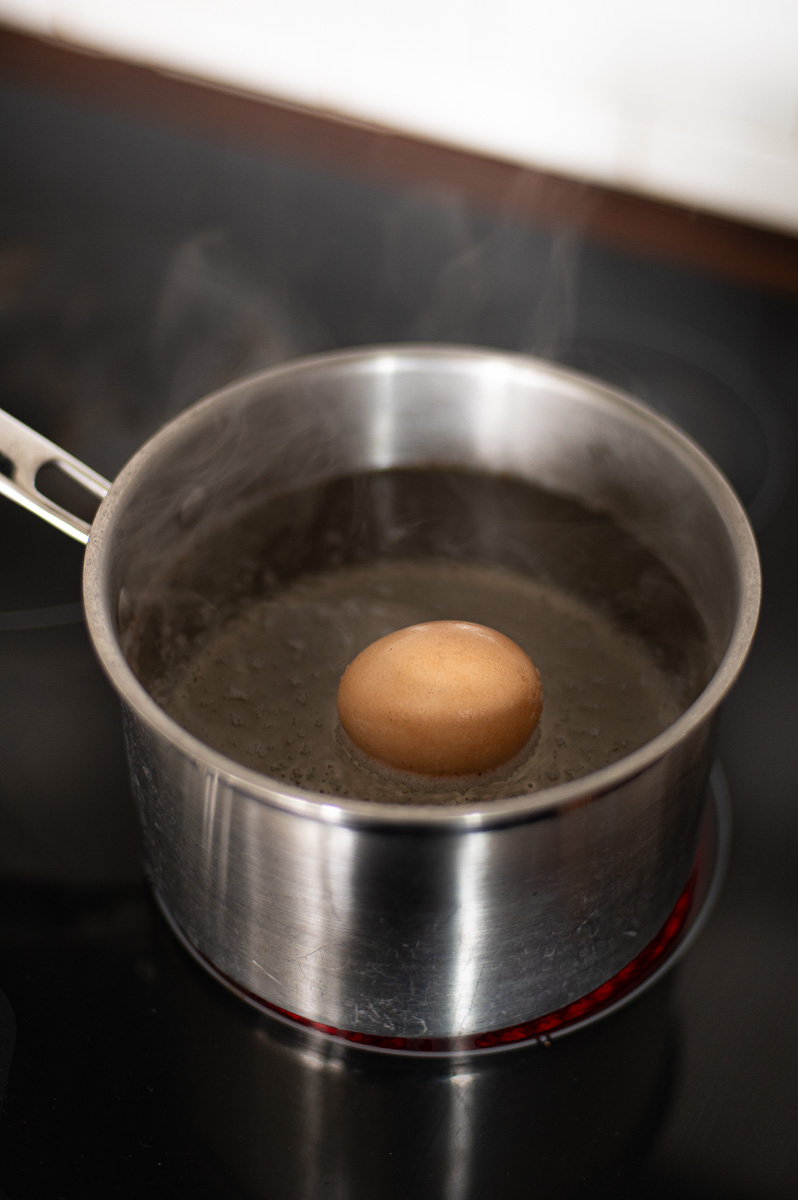
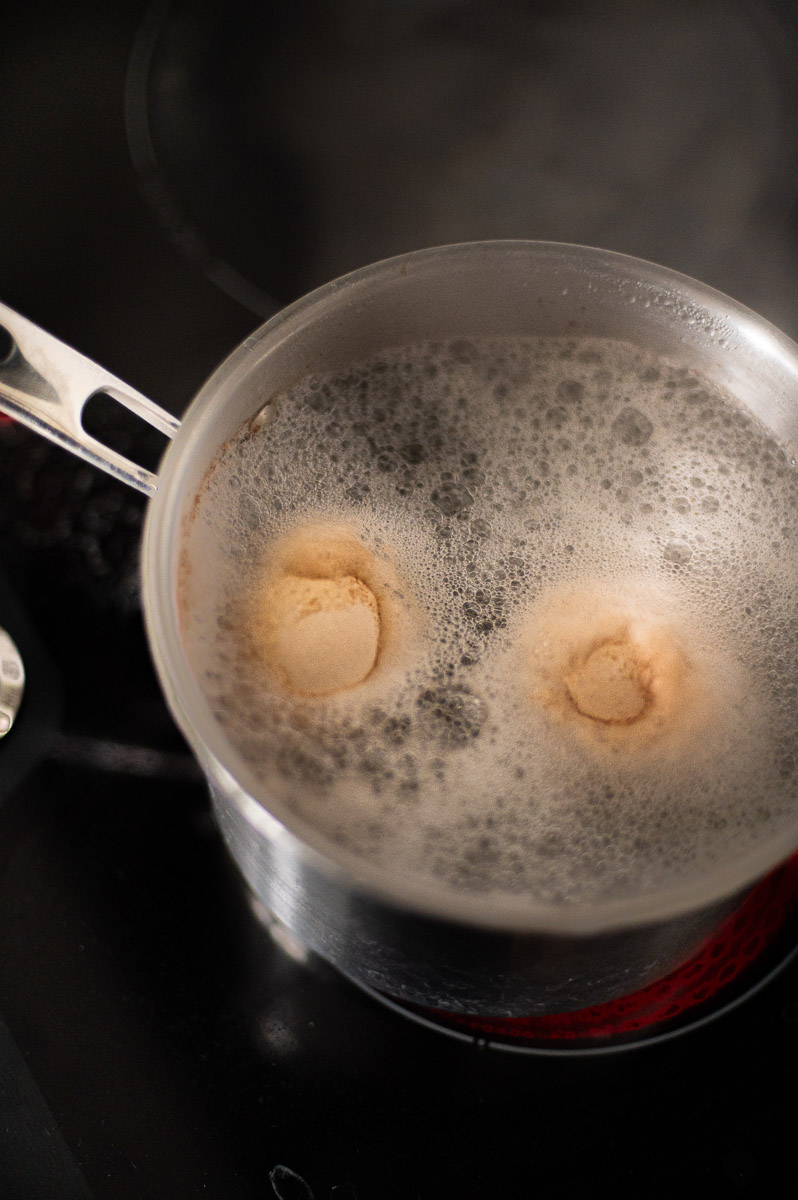
Step Three: Remove Egg When It Has Reached Desired Lightness
This time will vary from egg to egg, so it’s best to just keep your eyes on the eggs and remove them when they have visually reached your desired level of lightening.
That said, the eggs will lighten much faster in the boiling liquid than they did in the cold vinegar soak since the shell’s pores open slightly from the heat, allowing the acid to penetrate and react more quickly with the eggshell, which results in a faster, more even lightening.
Ballpark is going to be anywhere from 5-10 minutes.
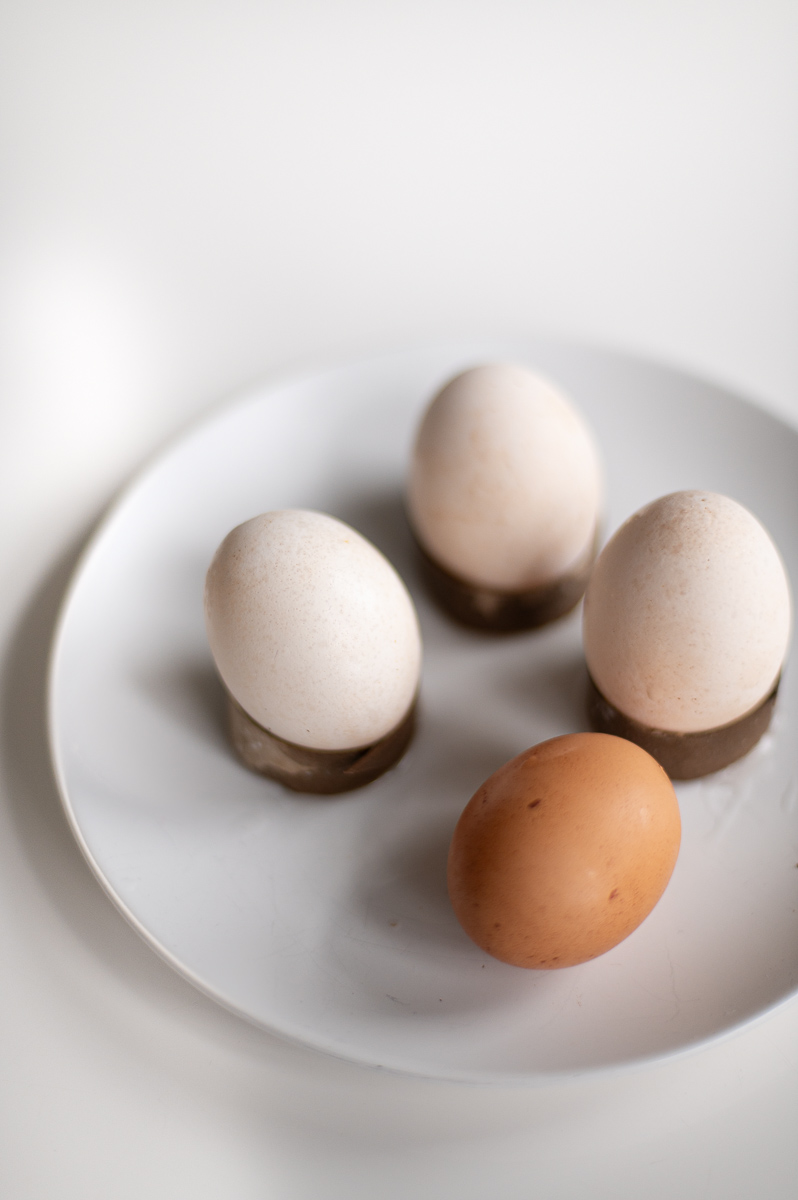
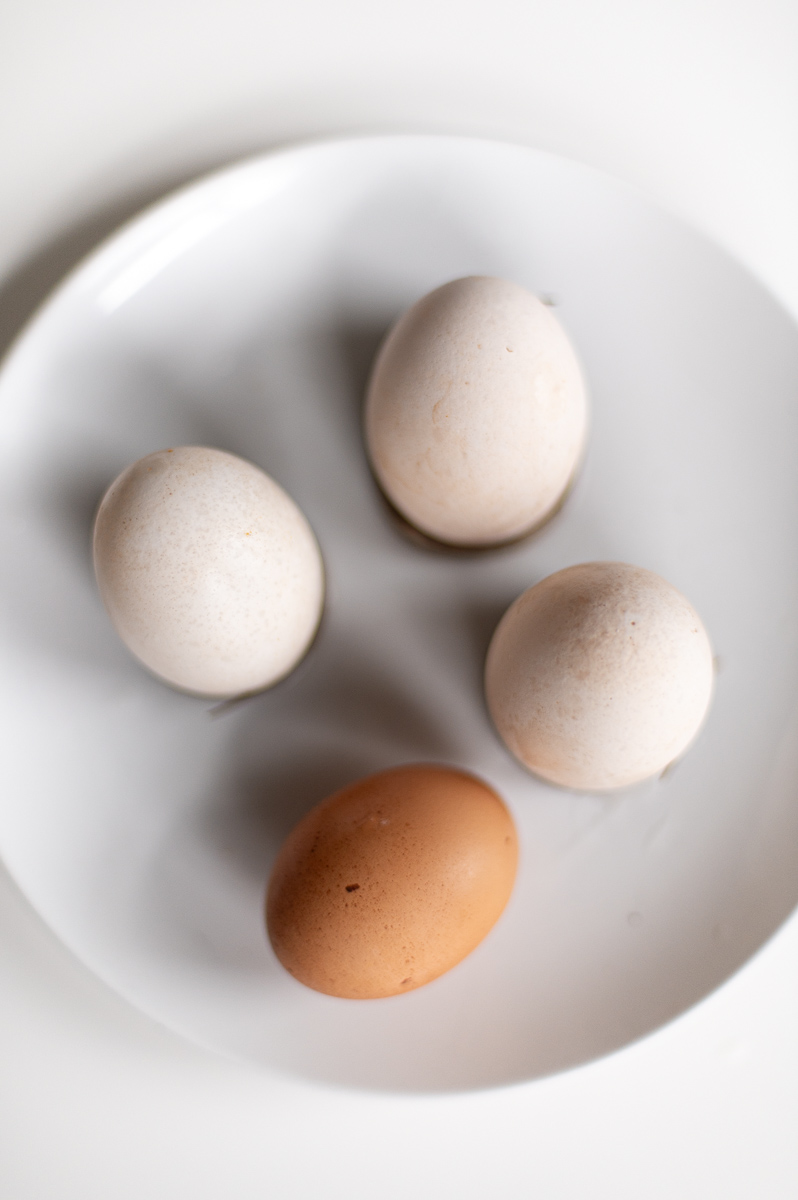
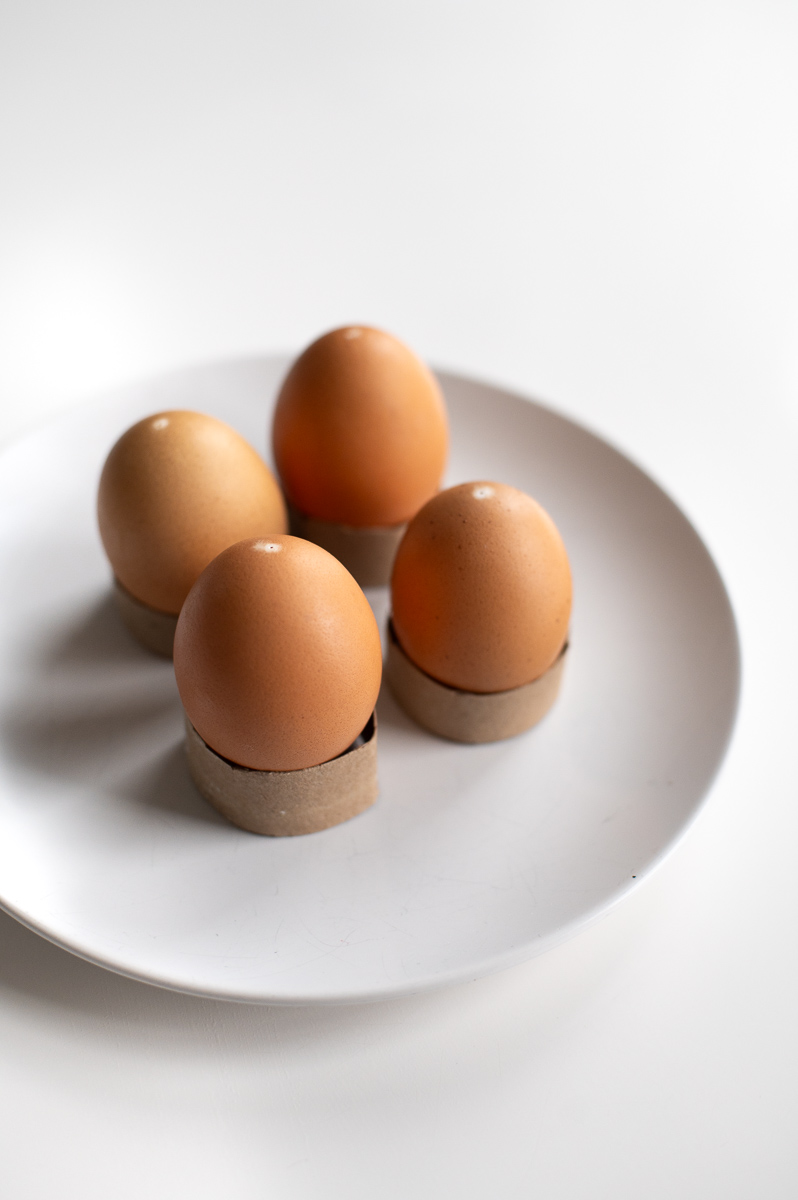
Since I used blown eggs, I created little stands for the eggs out of slices of an old cardboard tube I saved from a spent toilet paper roll, so I could stand my eggs up to drip dry and let any moisture drain out of them.
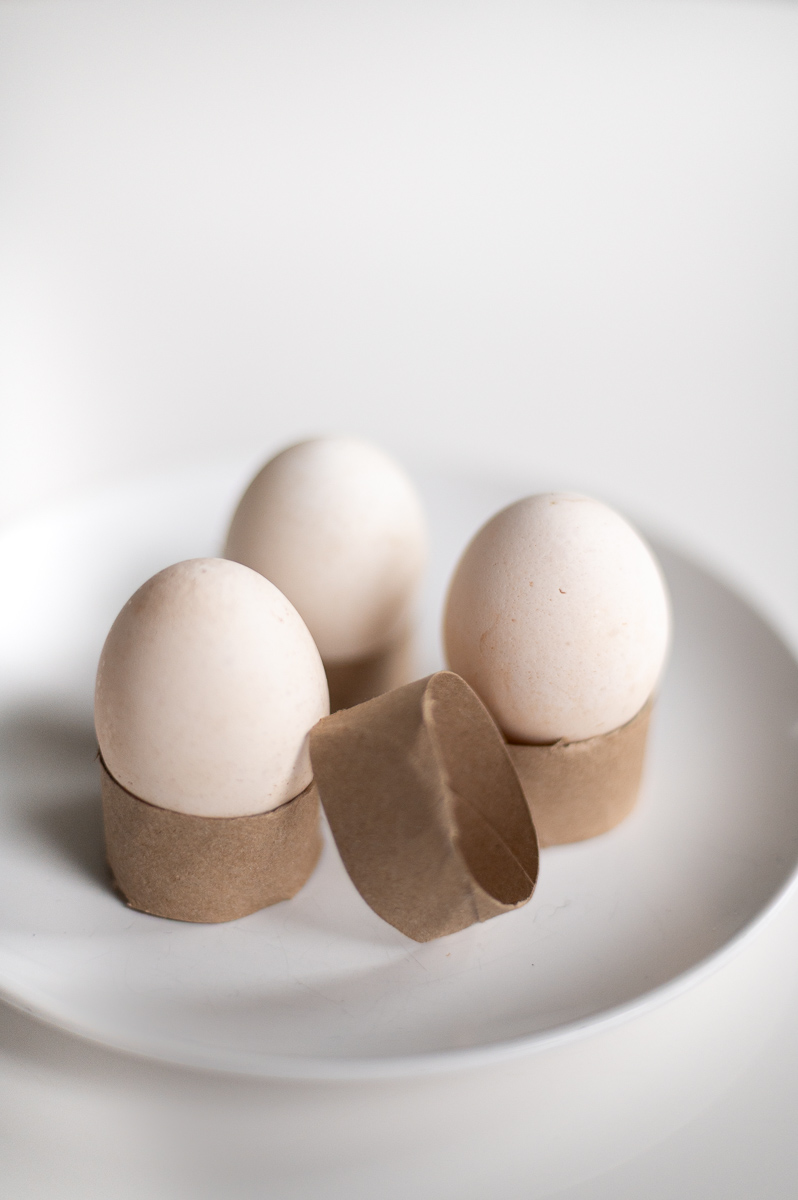
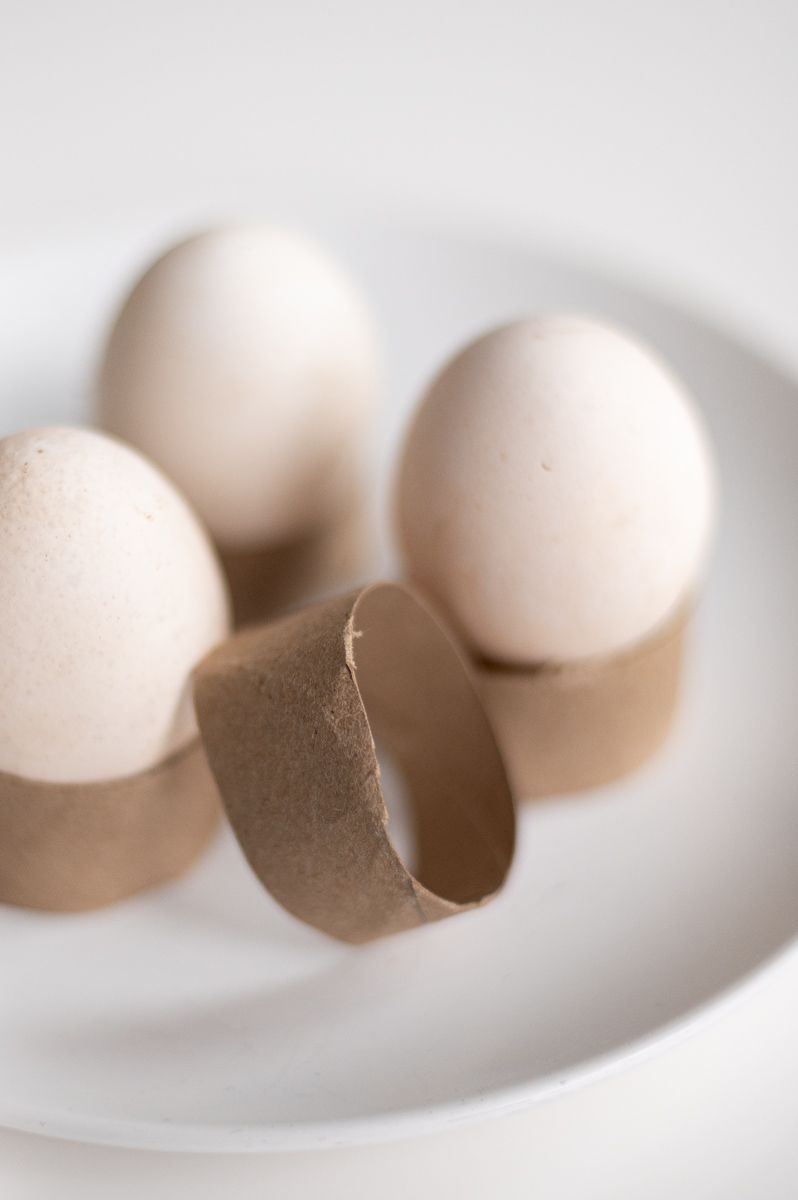
And if you’re paying attention and counting, you might notice I now only have three eggs instead of four. That’s because I definitely dropped one and shattered it during the process of making this tutorial...
How Long Should You Soak Brown Eggs In Vinegar?
Be aware that the longer you soak your eggs, the more fragile the shell becomes. Soak your eggs just long enough to lighten the color without compromising their structural integrity.
For a cold vinegar soak, it can take up to 20 minutes to achieve a very light egg.
Using the boiling method, similar results can be reached in 5-10 minutes.
I would avoid soaking your egg for more than 20 minutes max.
FAQ: Lightening Brown Eggs With Vinegar
Does vinegar make brown eggs white?
Soaking brown eggs in vinegar will result in a wide range of lightened shades from light brown and ivory, to cream or eventually a bright white depending on how long you soak your eggs for.
Will hard boiled eggs taste like vinegar after this process?
No, soaking the shell of your boiled eggs in vinegar will not affect the taste of your hard boiled eggs.
Will this weaken the eggshell?
Yes. The acid in the vinegar essentially eats away at the outside of the eggshell to remove the brown pigment. The longer the eggshell is subjected to this process the weaker it becomes. Eventually, if left long enough, the shell would dissolve entirely.
How long should you soak eggs in vinegar?
The answer to this depends on the level of lightening you want to achieve. However most eggs need to soak anywhere from 5-20 minutes. Less time if you are using the boiling method, more time if you are using a cold soak. Don’t soak your eggs for more than 20 minutes max using either method or the eggs will become too fragile to handle.
Can you use apple cider vinegar instead?
While other vinegars contain the same acetic acid needed to lighten brown eggs, white distilled vinegar works best because it’s clear and won’t add any unwanted color to the shell. Apple cider vinegar may work in a pinch, but its natural amber tone can slightly tint the egg. (It’s also more expensive).
Can you use bleach instead?
While bleach can strip pigment from eggshells, it isn’t food-safe for soaking eggs, can leave chemical residue, and will weaken the shell more severely. Vinegar is a safer, gentler and more controlled way to lighten brown eggs for Easter dye.
Final Thoughts
I am honestly shocked by how well this simple kitchen hack worked! Science for the win!
After my testing, I found that the method using heat resulted in lighter eggs and took about half the time. It was also less complicated since I didn’t have to worry about trying to submerge the eggs.
In the future, I’d plan on just skipping the cold vinegar soak altogether and going straight to the boiling method, which as a bonus helped sanitize the blown eggs I was using too!
However if you are doing this project with kids, the cold vinegar soak would definitely be more child-friendly and still result in noticeably lighter eggs.
Let me know if you give this easy kitchen hack a try this Easter and how it works for you!
Don’t Forget To Pin This Post & Subscribe!
Want to keep getting more DIY home decor inspiration, thrifting tips & tricks, free art downloads, reading recommendations, and home renovation tutorials? Then don’t forget to pin this post for later so you can follow me on Pinterest and then subscribe to my blog so you can get links to my newest content as soon as it hits the blog!